Things to Do in Mbabane
The capital that feels like a highland market town, where granite mountains hold up the sky.
Top Things to Do in Mbabane
Find activities and tours you'll actually want to do. Book through our partners -- no booking fees.


Plan Your Trip
Essential guides for timing and budgeting
Climate Guide
Best times to visit based on weather and events
View guide →Day Trips
The best excursions and nearby destinations worth the journey
Explore day trips →Where to Stay
Best neighbourhoods, hotel picks, and booking tips
Find hotels →Travel Insurance
What's required, what coverage matters, and how to get a quote
Read guide →What to Pack
Climate-specific gear, essentials, and what to leave at home
See packing list →When Should You Visit Mbabane?
Tap a month for weather, crowds, and highlights
View full year-round climate guide →Your Guide to Mbabane
About Mbabane
Mbabane greets you with cool, thin air carrying eucalyptus and woodsmoke from the hillsides, a sharp relief from the lowveld's heavy heat. This administrative capital never quite lost its village heart. Government buildings in the town centre share the valley floor with the cheerful, tin-roofed chaos of the Swazi Mall Market, where a woven sisal basket costs 150 emalangeni (about $8) and a cone of roasted peanuts goes for E5 (around $0.25).
The real city climbs the slopes. Up in the Ridge, the air grows crisper, and quiet lanes wind past diplomatic residences with gardens of purple bougainvillea, offering views of the sheer granite face of Sibebe Rock glowing orange at dusk. Down in the Ezulwini Valley, just a short kombi ride away, the pace slows further into a lush, green world of craft cooperatives and roadside stalls selling fat avocados.
The trade-off is quietude after dark. Mbabane's nightlife is modest, a handful of local shebeens and hotel bars where the real action is often a shared pot of umncweba (biltong) and stories. That's precisely its charm. It's a place where you come to breathe, to walk, and to understand a kingdom from its peaceful, elevated perch.
Travel Tips
Transportation: Getting around Mbabane hinges on the shared minibus taxis, known as kombis. A ride across town typically costs E10 to E15 (roughly $0.55-$0.85), and they follow set routes. Just shout 'short-left' to get off. For trips to the Ezulwini Valley or Manzini, you'll find kombis departing from the rank near the bus station. The insider trick is to avoid the late-afternoon rush when school and work let out. Kombis become packed sardine cans then. For more control, hiring a local driver for the day tends to be surprisingly affordable and unlocks the surrounding highlands properly.
Money: The Swazi lilangeni (E) is pegged 1:1 to the South African rand, and both currencies are accepted everywhere. You'll get change in emalangeni. Cash remains king, at markets, roadside stalls, and for kombi fares. While larger hotels and some shops in the Mall take cards, you'll want a stash of smaller notes for daily spending. A potential pitfall is assuming widespread ATM access outside the town centre. Fuel up on cash before heading into the valleys. Tipping isn't ingrained. But rounding up or leaving E10-E20 at a sit-down restaurant is appreciated.
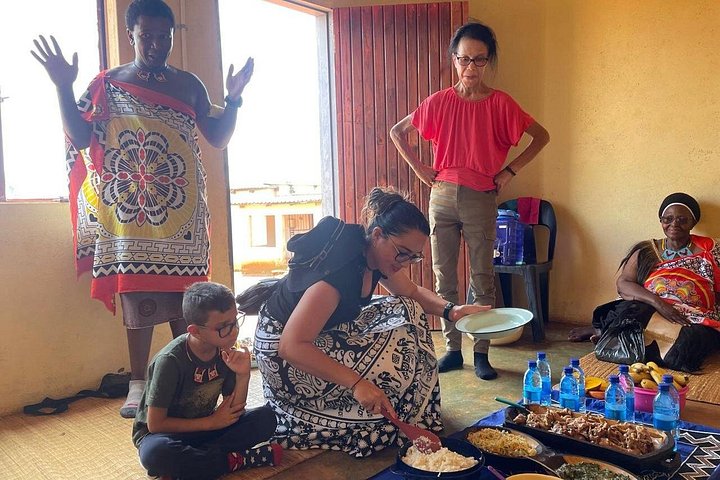
Cultural Respect: Eswatini is a respectful monarchy. A simple, polite greeting goes a long way. 'Sawubona' (hello) followed by a handshake, often soft and lingering, opens doors. When visiting a homestead or a cultural village like Mantenga, it's customary to accept the offered lihiya (a traditional wrap) to cover shorts or skirts. Photography requires permission, of people, the King's regiments (emabutfo), or royal property. The one rule to never break: never speak disrespectfully of the King or the Indlovukazi (Queen Mother). It's not just etiquette. It's law.
Food Safety: The local food culture is built around strong, communal dishes. Don't miss a chance to try a plate of sidvudvu (pumpkin leaves) with pap (maize porridge) and grilled meat from a braai stand. The high heat means things are cooked fresh and thoroughly. Street snacks like roasted maize or boiled peanuts from vendors are generally safe. The main caution is with pre-cut fruit from stalls sitting in the sun. Opt for fruit you can peel yourself. For water, stick to bottled, even in restaurants. The real taste of Eswatini is in the smoky sting of chili in a stew, not in taking unnecessary risks.
When to Visit
Mbabane's weather is its best feature, defined by mild, sunny days and cool nights for most of the year. The sweet spot is the dry season from May to September. Daytime temperatures hover around a perfect 20-24°C (68-75°F), nights dip to a crisp 5-10°C (41-50°F), and the sky is a relentless blue. This is prime hiking weather for tackling the Mdzimba Trail or Sibebe Rock, and hotel prices are at their peak.
The summer months (October to April) bring warmer, wetter weather. Afternoon thunderstorms are common, from December to February, turning the hills a brilliant green and pushing temperatures to 28°C (82°F). This is when flight and accommodation costs tend to dip slightly. But the humidity can feel heavy in the valleys.
The major cultural event is the Umhlanga (Reed Dance) in August/September, which draws crowds and can make lodging in the Ezulwini Valley scarce and pricier. For budget travelers, the shoulder months of April or October offer a decent compromise. Warm days, lower chances of rain, and thinner crowds. The only challenging time is late December to January, when heavy rains can make some rural roads slick and South African school holidays drive up regional travel costs.
More Ways to Experience Mbabane
Tours, day trips, and local experiences curated by on-the-ground operators.
Didn't see anything interesting yet?
Browse Viator's full catalog of tours, day trips, food experiences, and private guides in Mbabane.
See All Mbabane Tours on Viator